Saturday, March 12, 2016

SPACES & EXCHANGES: ¿Qué? A cartoon by Nate Beeler (2007)


In this globalized world, it's usual to see people from other countries coming to yours looking for a better job and a new way of life. There are lots of immigrations in the world, but the one which is more practiced, is the illegal one. Thousands of people are threatening their lives because they want the life they deserve and they think that coming to the globalized world they will get such a better way of life. On the one hand this is true,the majority of these people live in an extreamly poor situation. But, actually, on the other, it's true as well that when they do arrive here, they still have no home and no money, in a world in which they are not accepted and prices are much higher. Doing this, in my opinion, and as far as I am concerned, is like puting the string around your own neck. But it's undeniable that some people have succeeded and have got a better standart living.

¿Qué? A cartoon by Nate Beeler (2007)
Here we have a Nate Beeler cartoon talking about immigration in the United States. This cartoonist, is an american citizen who uses his cartoons to critice american acts and change people's view point. Here we can see three men, two reporters, one holding a camera and the other one a microphone, and what it seems to be a mexican worker holding lots of baggages with him. The cameraman has his face covered by the huge camera and the little microphones on the top. Both, the camera and the reporter's microphone, have "TV" written on them, so it's quit obvious that they are reporting some telivision news. The reporter, indeed, seems to be very exited, he looks very confortable putting his hand on his poket and winking to the camera but to the cartoon's viewer as well, and smiling while he says, "We're here live with the 300 Millionth american! How do you feel about this milestone, sir?".
They are, both of them well dressed compared to the man on the left who wears a tank top and jeans. He is, by the way shoesless. He actually, seems a little confused and do not understanding what's happening that's way he answers "¿Qué?" that means, "What?". He has a moustache and he has his shirt and arm a little bit dingy.

Here can see the two worlds, the globalised one, with nice suits and huge cameras and the one with dirty shirts and no shoes on the feet working like a slave for a little bit of money with what we can't live in this World. Indeed, the mexican man has already suffered before working in this situation. We can see he has a barbwire sticked to his left leg. This can mean that he passed a barrier of thorns in the frontier between Mexico and The United States of America. That is what lots of mexicans trie to do, pass the frontier to get better jobs, as we've already said. If the barbwire keeps sticking into his leg it can mean that he just arrived to The United States and that they are already exploiting him or that he didn't have a break to put that hurting thing away. The cameraman is the only one in the image that's a little bit more near to the mexican. The covered face, means objectivity and maybe a little bit of sympathy to the mexican worker, while the reporter's smile means, in my opinion, hypocrisy. The repoter is the only who does not have nothing more than a microphone to hold, while the others are holding heavy things for other people to enjoy their work.

As we've already said a few times people, move their contries to look for new oportunities. This mexican man can't even speak english, or that is what it seems because he answers in spanish to an english speaking qestion that is why I think this document can perfectly illustrate the notion of SPACES AND EXCHANGES. Because, people move to other countries even if they don't know the language to become somebody in their lifes, and they give, some how, the ir own clture to the new country, just living their and for example having children. That's why I think immigration (if it's not the way this picture represents) is really useful for countries' developpement.

Sunday, January 31, 2016

POST 10 : TATTOOS & GANGS

Is very well known that in todays society, especially between the young people, is more and more attractive to be as lawbreaker as possible. Maybe these people don't want or are not able to live in this way of life, but it just have an interesting aspects that catch the eye of the youth.


Why do you think more and more people wear tattoos (regardless of whether they belong to gangs or not)?

Presonally speaking, at first sight, I think that tattoos are very attractive to people because it's a way, first of all, to represent their thoughts but as well another way of rebelion and individuality, something that people are looking for since the beginning of the world. To do not belong to a group makes people think they are original and special. Tattoos are one of those ways to leave this groups to join others. But actually, at the end, everyone keep having the same tattoos so we don't know who becomes, then, a rulebreaker, breaking the walls of standardisation and becoming really unique. Maybe before but in any case, nowadays, I don't think we should relate tattoos with gang street bands because even old people (who should not be in favor of these kind of actions) have sometimes some tattoos.

Why do young people join gangs? 

As we have already said, people are constantly trying to be different, or to belong to some groups and not to others. In this phase where you are young and you don't know what you want to be, and what to do with your future, young people, might have the necesity to join a group where they will be accepted. Gangs may open their doors to those guys and show them a world which is not true at all, they promise them things that will never happen and a life they will never reach, just because this not the right way to do it. Those young people obnubilated by the shinning world they "can" reach, and in their situations, where they are totally lost, they will join this kind of corporations without a thought.

What link can you see between both topics and the notion of power?

Maybe the posibility of a person to change his body the way that person wants could be a kind of power; They have power on them, but on the others as well because, as far as I'm concerned, I think that doing what you want with your body do not let the others to tell you what to do, nobody can't say to do not put ink in your skin, because your decision, so in that way your are prohibing other people to do what they want to do. On the other hand, we have the gangs, I truely think that the manipulation that young people suffer by these kind of groups is an incredible form of power, because as it was said in the Newsweek, to leave a gang is extremely difficult. And I think it's because they use things to retain people, as they can't leave these groups, like family threats and these kind of staff that could make the manipulated people be affread of leaving these gangs.

To put it in a nutshell, I, personally speaking, think that tattoos do not have anymore the same image that thay once had. Now, even if I think we should evolve much more in tattoos mindset, we are in front of a era much more permissive in the tattoos topic.

Tuesday, January 19, 2016

POST 9: The Draw of 'Dead Town' - A Newsweek article (February 16, 2009) + GANGLAND Video


Go there for a full version of the Newsweek article given out in class.


Questions:

1. Gabriel Hinojos is an ex-con who was, in 2009, trying to redeem himself for his acts in the past "Getting out of a street gang in L.A.". He used to be a street gang in L.A., in Florencia 13, that has commited some misdemeanors and wants to change his lifestyle "is about like getting a tattoo removed". He was in the prison and he just wants to live his life like a normal person "Gabriel became a kind of poster child for leaving behinf the gang life.".

2. " 'Ya 'Stuvo' , spanish slang for "that's enough, I'm done with that." " It is the tattoo removal center where Gabriel Hinojos goes to remove his tattoos. Is almost known by everybody that tattoos are for life, once you made one is very difficult to remove it. Well, it could be like an image of the thoughts of people having tattoos and wanting to remove them. With the setence "Ya estuvo" the pacient could mean that another life begins and it is because of the tattoo remove.

3. The "black teardrops" are the tattoos that the criminals do when they murder someone or a prison stint "Each one can stand for a stint in prison or a person killed.". It's also called "black" because the ink used is the black one, it's tattoed below the eye, and they do it each time they do what we have just explained before.

4. Gabriel Hinojos went several times to " 'Ya'Stuvo' " center. He commited a lot of crimes so he should have the body full of tattoos. Those therapies are not easy to do and of course not short. It's extremely painful, " "You know when you're cooking and the oil hits you? It feels like that, over and over." ".

5. "Getting out of a street gang in L.A. is about like getting a tattoo removed: slow, painful, scarring." This looks like a very difficult and hard work to manage to do, and personally speaking, I think that it must more difficult to clean your past than leave those street gangs.

6. Actually I don't really think so, it is said that, "But escaping the pull of gang life is extremely difficult." and of course, what make us assure that it's impossible for some people to do it "a gang banger can never leave a really brutal gang like Mara Salvatrucha 13.".

7. Gabriel was one of those cases. He should have commited a lot of crimes compared to a normal person, but not as many as Mara Salvatrucha, for example. He just had to go to prison and redeem their sins.

8. Gabriel is saying that it is almost impossible to leave this kind of gangs. He is, as well saying that is even more difficult, almost a labour of Hercules far beyond a normal person, to leave the past and get introduced into the society like a normal citizen. People will judge you because of your past and not because of your present acts, what it is totaly normal after what you did.

9. Even if it's difficult to get reintroduced to society, their are some exception... Gabriel was one of those. He aparently became a model of what criminals should do to get intouched  again with society. But, as always, everyone returns to its origins and that's what this article explains at the end. Actually and as far as I am concerned, I think they give a very simplistic, I think is enough suffering to be trapped in a jail for some mounths or even a week. Do not knowing what's happening to your family. And as we already said, life after criminal acts is really difficult no one will want to help you because they will have a preconcieved image of you, they have excuses, but not everybody is identical. I think, in his case, Gabriel did not have another alternative that to come back to jail, it was know like his new house and the "real world" seamed to him like foreign.

10. In this photograph we can see who we could think is Gabriel Hinojos. He is getting a neck tattoo removed in 'Ya Stuvo center. We can feel his pain during the session, a pain that must be liberating like the ancient greeks used to say.

Thursday, November 26, 2015

'Pop Art Myths' and the 'MYTHS & HEROES' Notion

   Pop Art began on the late 50s and the the early 60s bringing with it what would be a groundbreaking movement at the time. Like everything that starts from scratch, it was sightly criticized and even more in this case, because Pop Art took pieces of art from classic world and them into modern pieces of art. That made people think they were copying when they were recreating.

'Pop Art Myths' and the 'MYTHS & HEROES' Notion
Roy Lichtenstein, Look Mickey, 1961
Myths and Heroes. Actually what are myths? and what about heroes?

     A myth is a popular belief or story that has become associated with a person, institution or occurrence, especially one considered to illustrate a cultural ideal. 
    There are two possible definitions for the Pop Art hero, at least, for this Roy Lichtenstein's painting. The nearest  one would be, the protagonist of a story, the principal male or female character in a novel, poem, or dramatic presentation. The second one, but that could fix as well in this kind of hero, is a character with noble qualities who, in the face of danger and adversity or from a position of weakness, display courage and the will for self sacrifice- that is, heroism - for some greater good of all humanity. Both of them fix in because here we are talking about two characters that are made to teach little kids. These characters must face problems to teach children how to resolve them. And of course those characters are the main characters, if these adventures will happen to other characters would be meaningless series. We are going to talk about myths because for children and actual adults and teenagers Mickey's adventures became almost mythological.

This Roy's painting based on the famous drawing illustration of Bob Grant and Bob Totten from Walt Disney Studios called, Donald Duck Lost and Found. This illustration was made on 1961 by Roy Lichtenstein. It illustrates one of the most famous Myths in the world, the Narcisus' myth. Dolnald's fishing with Mickey and the rod has taken his T-Shirt at the back, while he is focusing on the water. Obviously it must be difficult to make this "fish" get out of the water that's why he says "Look Mickey, I've hooked a big one!". In a psychological way we could say that he is overestimating himself. Like Narcissus did  with his pretenders, before Nemesis made him drown in the pool because of his reflexion. Like in the myth, Narcissus/Donald is the only character of the story that doesn't see what's really happening because he is focused on his reflexion. One doesn't see he is drowning and the other doesn't see his fishing the back of his T-shirt. Like every Pop Art painting, here, Roy takes an ancient or mythic story and renews it to make it maybe more famous or more accessible to people. Here, it's even double renewed, because Walt Disney Studios already did it with the original myth.

Sincerely I loved this image illustrated by the painting. Myths are things that really interest me. I really love Greek mythology and it interests me very much to know where all those myths come from. But I also have to say that I prefer much more the original painting because even if I really like the Pop Art version I'm a fan of Disney's creations and much more of retro ones. So I think that here, my opinion it's not the most objective one. Anyways, I love this kind of movements that bring again things that happened a long time ago adapting the way to bring it to the people's way of life.

Sunday, November 22, 2015

Pop Art Myths

Pop Art is a late 1950s and a early 1960s movement. It's a groundbreaking movement liberating and bringing an end to the division between "high" and "low" culture. It endorsed the new culture of technology and consumerism. Thanks to the reciprocal exchanges between art and any type of visual and popular culture, every object could become art. Every Pop Artist wants to make this innovative impression.


Collage, advertising, comics

1956, Richard Hamilton's
 Just What Is It That Makes Today’s Homes So Different, So Appealing? 
   This collage is probably the first Pop Art image. Being influenced by Dadaism and Cubism, Pop Artists followed the tradition of the collage but adding some subversive and allegorical components.
1955, Andy Warho
À La Recherche du Shoe Perdu
1961, Roy Lichtenstien
Look Mickey
   This portfolio of different and anachronistic shoes, made at the beginning of the Warho's career, makes a crucial point to the birth of this new tendency.
  This painting was the first Lichtentien pop painting. It was based on Donald Duck Lost and Found illustrated by Bob Grant and Bob Totten. It's an illustration of the myth of Narcisus.
Bob Grant and Bob Totten
Donald Duck Lost and Found


         Emblems


  The media knew a huge development in the mid-20th century. A mass of ads, slogans, brand names and logos invaded people lives. It was the perfect opportunity for the artists to be as well invaded by the inspiration a new ideas. A lot of every days life objects were represented on different formats with words like "eat", "hug"... 

John Haughey
Coke Bottles and Pepsi Caps


                    Myths

Andy Warhol
Christian Bale from Psycho
   Hollywood created some idols for the cinema business world. Marilyn Monroe, Marlon Brando were some of them. Lot of them worked with some Pop Artists to become even more famous. That's why, some how, appeared some fetishes to a couple of actors. Artists were able to combine media and culture.


Wolf Vostell
Marilyn Idol


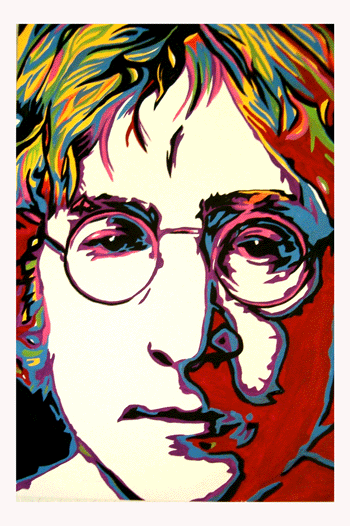
John Lennon psychedelic portrait

                           Portraits

With Pop Art portraits were as well revolutionized. Pop Artists did not search to represent reality, in fact, what they wanted was, across painting some images or lines, let the spectator find the hidden idea, a face, maybe some expressions... This way portraits become simulacrums.


     Landscapes, Interiors, Still lifes
    

   With the consumer culture appeared some communicative codes bearing arbitrary meanings. This was the principal consequence to Pop Artists reinterpreting traditional genres of paintings, landscapes, interiors, still lifes... The genres are adapted to the contemporary urban milieu, a private domestic space, in the traditional still life; an artificial composition arranged by the artist, in the avant-garde. It becomes a public, commercial space.

Tom Wesselmann
The smoker
Tom Wesselmann
Big study for Nude


                     Urban eroticism


The media and the 20th century were flooded by the sexual freedom. The eroticism invaded pictures and ads. Tobacco, cars, drinks, food... Everything was surrounded by sexy women and men. These pictures symbolized beauty, sex, fertility, love and (because of the ads) prosperity and comfort.

History painting

Andy Warhol
Mao
The media evolution allowed Pop Artists to access much better to news and make some critics and illustrations of contemporary events. They were much oportunities to send messages to people and spread artists' opinions. Also, if some news were not well known Pop Art eases people to know the truth.


              Art about art

Équipo Crónica
The Living Room
 

In
Pop Art it's essential to use images on images, art on art. This is the way to pose questions about the evolution. Artists can create new versions of Botticelli using silkscreened photographs. It also helps Pop Artists to demythologize certain master pieces. Using older paintings they create the paradox, the exchanges between the different cultures...


To sum up and to put it in a nutshell, Pop Art is an innovative movement that picks important things from each culture and modify it to make their own culture. We could see this kind of actions like an irreverence, disrespecting and profanity. But actually I see it like an evolution. Without no evolution we would still picking bananas from the trees. I think it's something good and necessary, after all, every artistic movement did it, and why would one of them be better than the others? Everyone has born thanks to the needs of the populations or what was fashionable at the time.

Sunday, October 4, 2015

Idea of Progress: Quality Vs Quantity

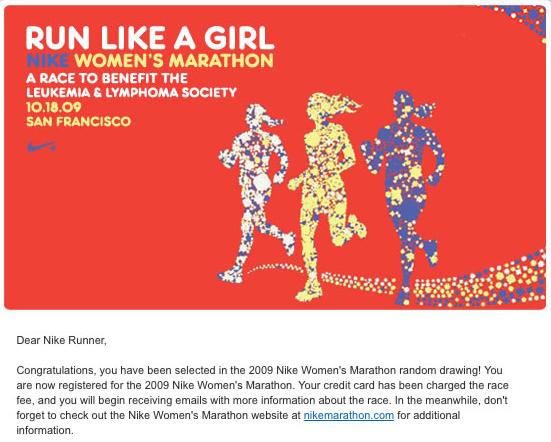
Nike advertisement, Race to benefit the Leukemia and Lymphoma
society 

    We can see in this Nike advertisement that this athletic company is promoting the women's sport. As you can see in the billboard there is a women's marathon promoted to help the Leukemia and Lymphoma society. In one hand this advertiment is helping this society and also showing that Nike's compromised with solidarity causes. In the other, Nike is helping to the betterment of equality. This advertisement only shows the runners' hair as "symbol" of feminity and even men can also have hair that long so there's not any stereotypes that would point out this group. The difference between the red background and the runners stands out the latters. As well, the different colours can refer to the different ethnic groups, all women are so concerned in this social movement. This shows the evolution of the people mindset. There's progress refering women in our society. Is obvious is not enough, but contrary to Betty Friedam (a woman in the 50's that had problems for runnig in a race) here we are asking women to run. Although this advance, women really have to have more equality overcoat in people mindset. There must be a revolution in stereotypes. It's not normal that some people think like in this picture. In this drawing we can see an interpretation of Darwin's evoluion theory but with women. That's a little male chauvinist. Even if we have an image of a proud and entrusted, the final woman (the one that is supposed to be nowadays woman) is an stereotype, a negative one. Unlike the advertisement, this picture shows a woman with a dress put on, high heels... It gives a really bad image and idea. Not all women wear dresses or heels. To asociate one with another shows that society doesn't have evolved enough so far even if there are some steps forward.
Picture imitating Darwin evolution theorie

Statistical table, workers by sex and social class between 1998 and 2008


                 This statistical table shows the type of                                        workers between 1988 and 2008. We can see                              that in both cases (in the 80's and the 2000) men are a bigger number and porcentage than women. Anyways, women knew an incredible increase since 1988 when they were just 533.698 what is insignificant with the 1.439.647 of workers they were in 2008. They were like half of men workers in 1988 (1.011.222 men and 533.698 women) but a little bit less than them in 2008 (1.814.167 men and 1.439.647 women). Again, a really big difference is notable but not enough.